
Tight large cinched belt.
Wide and deep black silhouette,
the look of style.
Tight large cinched belt.
Wide and deep black silhouette,
the look of style.

“The most beneficial aspect of collecting is it’s a great STEM activity that teaches children a lot about categorizing, sorting, and observation.”


If you look up the word collection online you’ll see it either means “a group of things that have been gathered” or “a set of items gathered together.” That could mean anything from toy cars to comic books to rocks. It doesn’t matter as long as it includes something you’re passionate about and that brings you joy.
If you don’t collect something already, but want to start, there are a few things to consider first, such as your interests. If you like history, you might consider stamps or coins. If you like books, you might consider those. You could even start a collection with an item you inherited from a friend or a family friend, (i.e., a handkerchief or a watch.)
Since Summer’s right around the corner, and we’ll all be able to go outside freely soon, one of the best things to collect are natural objects, like rocks, shells, sticks and other portable souvenirs you can find either in your own backyard, neighborhood, park or school playground.


Before you start out on your expedition you should gather your equipment-a pair of gloves, newspaper to wrap your finds in, labels and markers-then create or buy a nature journal. To create a journal all you need is a large paper bag, a hole punch machine, a stack of three-ring binder notebook paper and some yarn to hold it all together. Now that you’ve created your journal you can bring it to life with sketches and observations from your trip about your surroundings and questions you’d like to ask yourself on your trip, such as “What types of animals do I see?”
Once you get your journal and growing collection home you can do further research on what you’ve collected, and observed, online and at your local library.


To further organize your collection, as you acquire more, you can decide what it can be based on (i.e., color, shape, texture, etc.,).To remain consistent, It’s an excellent idea to record as you collect by reporting in your nature journal. To further help you write down the information a great skill to perfect is labeling your items temporarily with a piece of masking tape listing the items date and place of origin.
Later when you want to store and display your collection it’s best to use something recyclable like an egg carton, shoe box, or glass jar to reflect the natural sentiment of the hobby.


The tragic thing about homelessness is it’s not caused by one specific thing and our most vulnerable citizens can become permanently traumatized. If the statistics are to be believed, California has about 151,278 homeless individuals. The disabled make up 38%, the extremely low-income 30%, the mentally ill 25% and those with substance abuse problems 64%.
Fortunately while this isn’t an easy problem to solve, there are a variety of things you can do to support the homeless and ease their burdens. Following are a few examples:
So far Bombas has donated more than 40 million items to more than 3,500 organizations.”
“In 2019 from January-December they raised $24,328,714 from their thrift store, eBay site, and other endeavors.”
Finally, despite the impossibility of solving this problem, the consensus seems to be in order to get it under control this country needs to increase services, social connectedness, provide affordable housing and offer well-paying jobs.


Since the pandemic has caused us all to experience an increased amount of stress, depression and isolation being cognizant of our psychological health has become essential. For organizations like Mental Health America https://www.mhanational.org it’s vital enough to cause them to promote May as Mental Health Awareness Month with plenty of advertising and resources.
“Created in 1949, its goal is to let the public know that no matter what race, age or sex you are it’s okay to seek professional help and do something to make yourself feel better whenever you need to.”
On your own that could be something as relaxing as reading a good book, writing or drawing in a journal or practicing yoga to your favorite music.


While I definitely believe and regularly lose myself in literature, write and draw in a journal, and relax with yoga and other exercises my real go-to healer is tap dancing. Joining May, in celebration, is another occasion that has special significance for lovers and dancers of tap-May 25, National Tap Dance Day. Due to the way my life has personally been turned upside down, in addition to the pandemic, I believe the art form ties in seamlessly with Mental Health Awareness Month because it encourages physical exercise and opens you up to positive feelings.
“On November 8, 1989 President George H. W. Bush signed into American Law National Tap Dance Day on the famous tapper Bojangles’ birthday. Now it’s celebrated worldwide.”
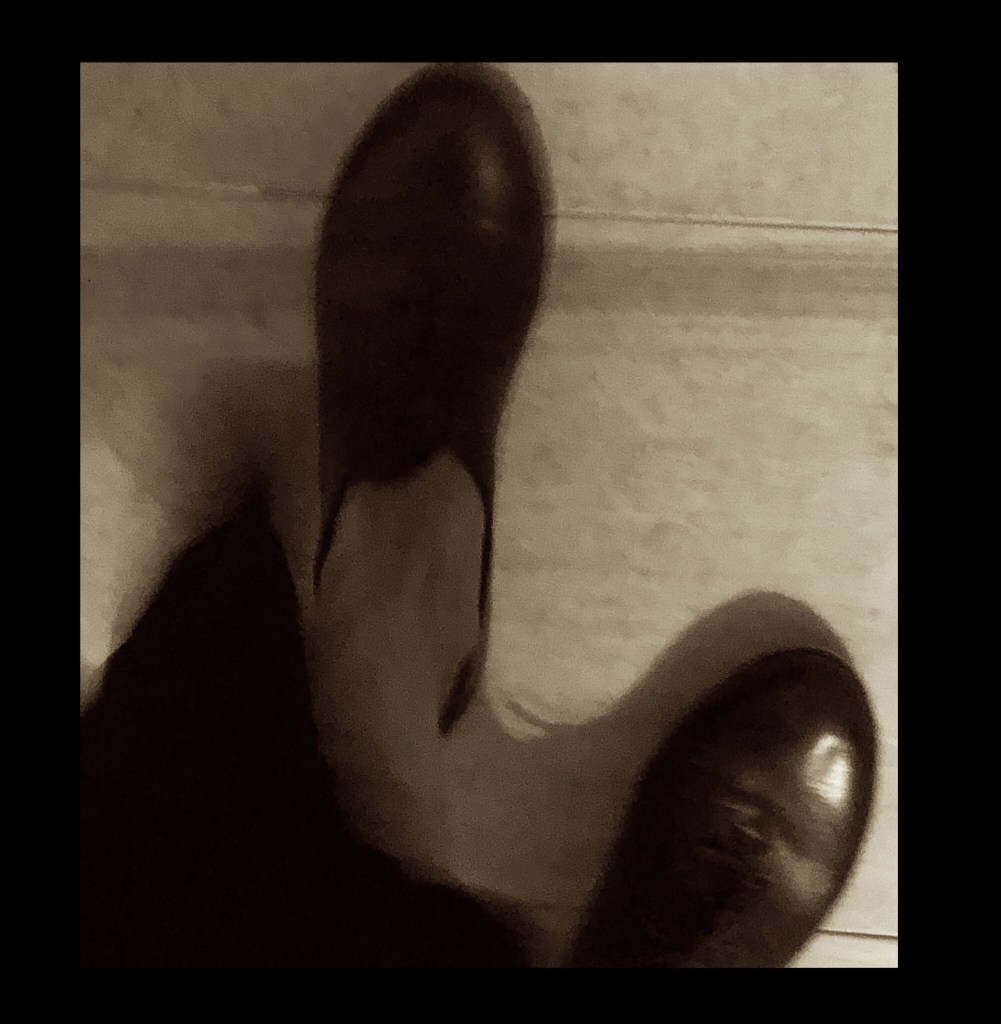
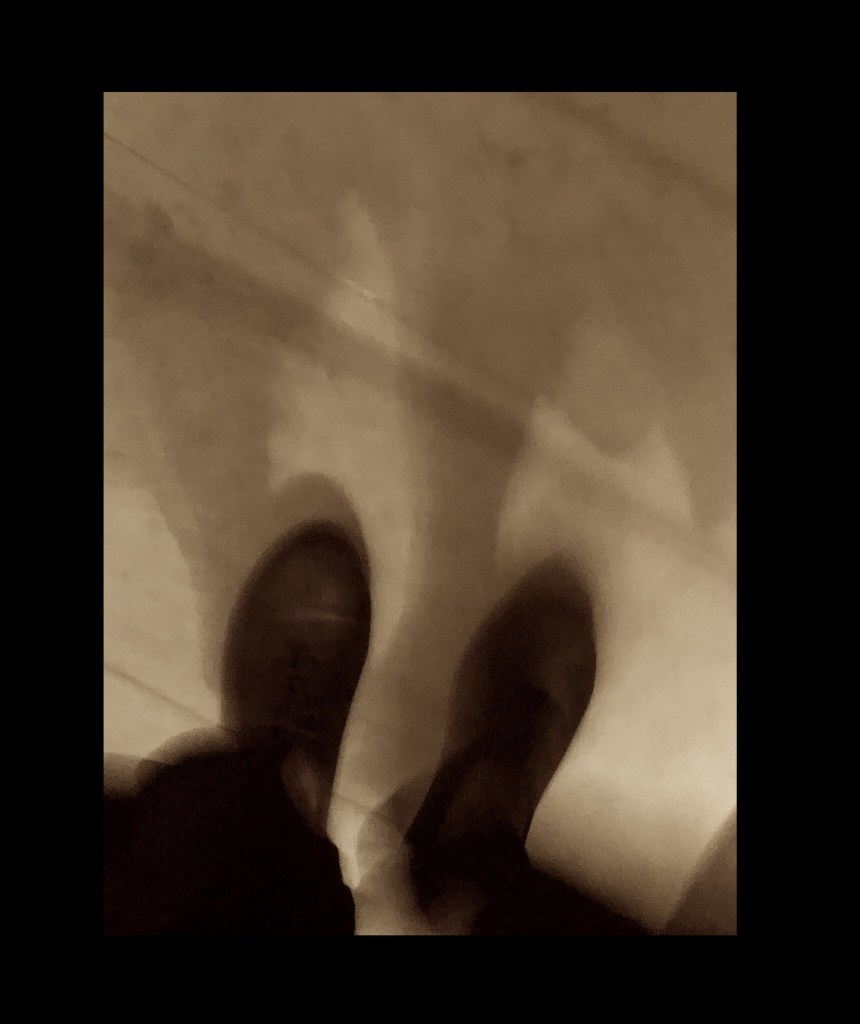

To give you a little history of tap…”It originated in the United States in the early 19th century through a combination of African and Irish American dance styles. Characterized by various foot movements known as steps, flaps and shuffles it’s both extremely enjoyable to watch and perform.”
I’ve been tapping for over 10 years now, and besides being one of my security blankets whenever I’m feeling overwhelmed, it’s also a wonderful cardiovascular workout and inexpensive to do. All you really need to do it is a pair of tap shoes, a portable wooden board and comfy dance gear.
Finally, the best thing about tap is almost anyone can do it and learn something about themselves and others from this amazing dance.


While growing up in South Central Los Angeles, I visited Baldwin Hills Crenshaw Plaza many times with my mother and my grandmother on various shopping trips. Besides the ultra-chic window displays, salespeople, and merchandise I also remember going to the May Co. regularly to get my hair done at the African American beauty salon Soul Sisters.Over the years I’ve become increasingly fascinated by the architecture of the mall, so one sunny day while I was visiting, I grabbed my iPhone and took a few photos outside. Remembering the tips my teacher Ford Lowcock gave me in my iPhone Photography class at Santa Monica College I shot from a variety of angles.
Later while researching my photos on the internet I discovered the Baldwin Hills Crenshaw Plaza was built in 1947 and officially opened on November 2, 1947. Known as one of the “first regional shopping centers in the U.S. that was built specifically for the automobile” it’s still a popular neighbored destination.
Secured on both sides by two Art Deco buildings, that still remain excellent representations and retain their Streamline Moderne characteristics, are the Broadway Department Store and the May Co. Department Store.
“Streamline Moderne is an international style of Art Deco architecture and design that emerged in the 1930s. It was inspired by aerodynamic design and emphasized curving forms, long horizontal lines, and nautical elements. In industrial design, it was used in railroad locomotives, telephones, toasters, buses, appliances, and other devices to give the impression of sleekness and modernity.”
The designer of the Broadway Department Store was Albert B. Gardner, and it’s located across the street from the May Co. Department Store.
The May Co. Department Store opened as a “free-standing store” and was designed by Albert C. Martin and Associates. It was officially completed in October 1947.
During the 1980s a bridge was built to connect the two stores and “form a walkway for shoppers to the mall”. Today, in addition to a diverse group of stores occupying the mall, the two anchor stores are Macy’s and T.J. Maxx.


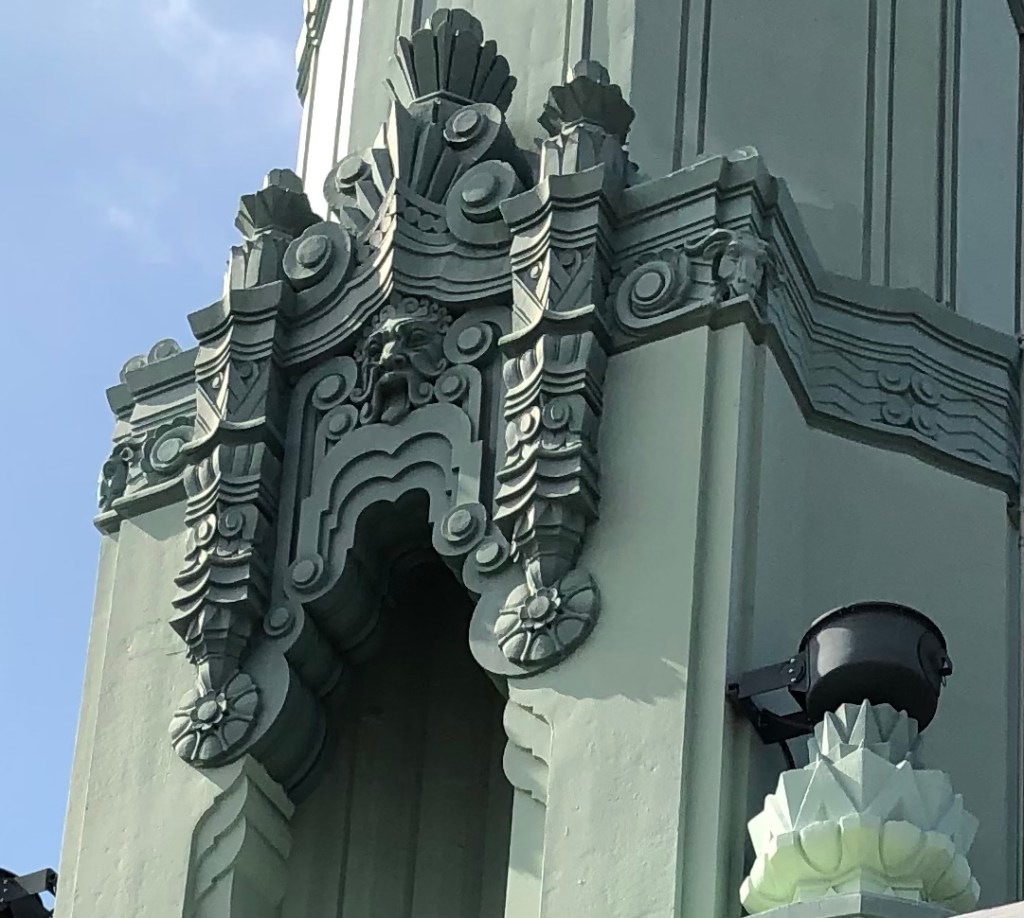
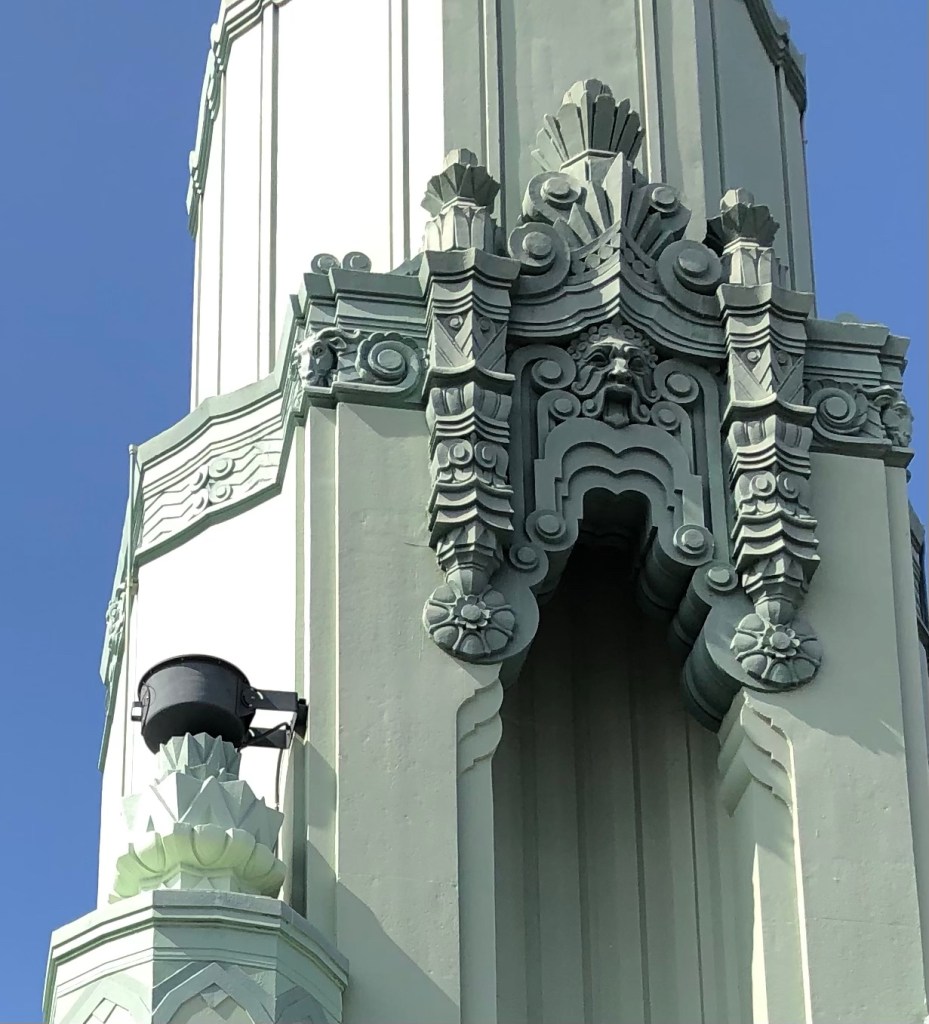
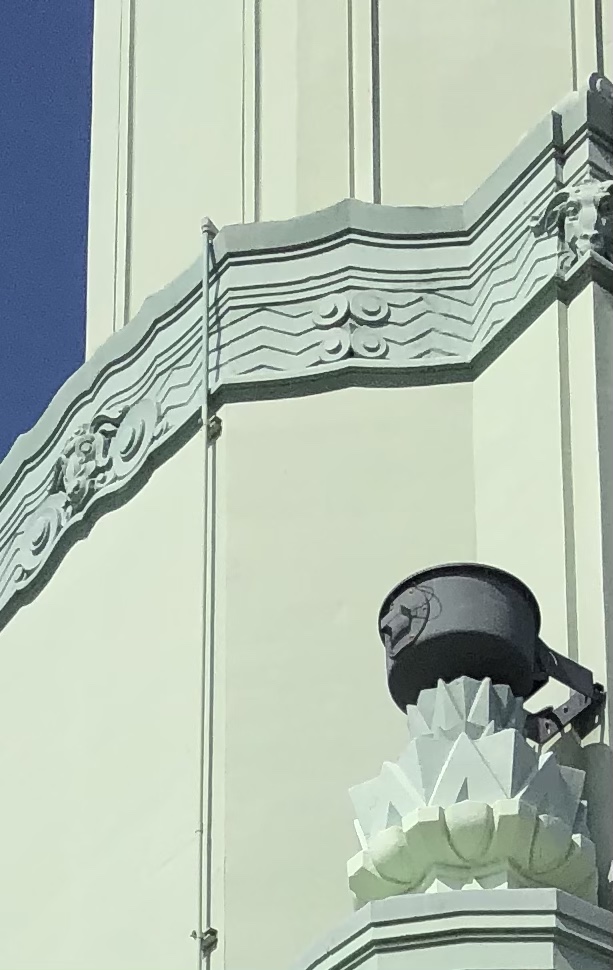

Art Deco, sometimes called Style Moderne was a type of visual art that first began in the mid-to-late 1910’s and lasted until the beginning of WWII. It was one of the first truly international designs.
Named after the 1925 International Exposition of Modern Decorative Arts held in Paris it influenced the design of buildings, furniture, jewelry, fashion, cars, movie theaters, trains, ocean liners and everyday objects such as radios and vacuum cleaners.
Simple and clean, with geometrically stylized details, its signatures include florals, animals and sun rays. Another characteristic of Art Deco, especially in architecture, is its use of man-made materials such as reinforced concrete.
Besides Art Nouveau, the Bauhaus, Cubism and Serge Diaghilev’s Ballet Russes its designers were also inspired by the Native Americans, Egyptians and nature. One of the most famous Art Deco architects was from Finland and his name was Eliel Gottlieb Saarinen (1873-1950). Luxurious, glamorous and exuberant the goal of Art Deco was to represent “social and technological progress”.
The building I’m concentrating on in this piece is the Vision Theater (formerly the Leimert Theater)because not only is it exquisite, and an excellent example of 1930s Art Deco, it also has an interesting history. Located in a neighborhood in South Central Los Angeles at 4252 South Bronson Avenue the area it’s in, Leimert Park, was named by the developer Walter H. Leimert who developed it in 1928. It was one of the first planned communities in Southern California designated for upper and middle-income families.
The park itself, was designed by the landscape architecture firm operated and managed by the sons of Frederick Law Olmstead (1822-1903), the landscape designer of Central Park in New York City. On May 2018 the area between Vernon Ave., Crenshaw Blvd., 43rd Street and Degnan Blvd. became Historical Leimert Park Village. An enclave of African American cultural arts it’s often been called the Harlem and Greenwich Village of the Westcoast.
Vision Theater was designed in 1931 by the Morgan, Walls and Clements architectural firm and “erected by contractors from Lindgren and Swinerton Inc.. The structure itself is “made out of reinforced concrete and topped with a 115 foot ornamental tower.” Used to attract movie goers from their cars it was a smart use of advertising.
Stylistically the building is “representative of the streamlined Spanish Colonial Revival and Art Deco style” reflective of the era following the lushness of the Jazz Age.
Reportedly organized by president of Fox Westcoast Theaters Harold B. Franklin and Howard Hughes it was initially utilized for movie premieres. First opened on April 21, 1932 as the Leimert Theater it remained popular and showed many movies for years before it closed in 1968. The last film to premiere there was Bonnie Clyde.

Beginning May 3, 2021 the Los Angeles Public Library (LAPL) opened up limited in-person services at 38 of its locations, including the Central Library downtown https://lapl.org.The hours the Central Library is open is Monday-Friday from 10-4:30 pm and the hours for Regional Branch Libraries are: Monday, Wednesday, and Friday from 10-4:30 pm, Tuesday and Thursday from 12:30-7:30 pm.
“The Los Angeles Library Association was formed in late 1872, and by early 1873, a well-stocked reading room had opened in the Downey block of Temple and Main Streets under the first librarian, John Littlefield.”



Years ago, before I became a regular model for the Federation of Vintage Fashion’s Vintage Expo I used to marvel at one of their gorgeous regulars. Statuesque, with clear white skin, black hair and perfectly applied makeup, the most amazing thing about her modeling style was the prop she used-a large black and white tuxedo cat! Nestled gracefully across her shoulders he accentuated every garment she wore with skill and efficiency. Later I found out he was her partner and muse when she danced professionally as well.

Now that I have Zombie, I realize why her cat influenced and participated in her creative process so completely. He wasn’t just an important part of her team he was symbiotically connected to her creatively, emotionally, intellectually and psychologically.
Long past my two Covid vaccinations and with things starting to open up again I’m feeling a little restless and want to travel. Before the pandemic I would’ve been happy going to Catalina or San Francisco, but after being cooped up in Los Angeles for so long I want to go somewhere non-casual and steeped in history. What I really want to do is go to a place where Zombie and I can show off!
One of my Instagram friends helped me decide about our destination when, after seeing one of my posts featuring my collection of hats, she said, “If you love hats you should go to the Melbourne Cup Races because when everyone’s dressed up it looks like one big hat shop!”

Melbourne Cup
World famous and swaddled in sartorial lore, the Melbourne Cup at Flemington Racecourse, has been a media sensation since its inception in the 1800s. While doing my research for my fantasy trip, the most fascinating pieces of news I came across was that Queen Elizabeth, who set the trend for “mid-calf length dresses, worn with pearls, hats and gloves” was also equally passionate about horses, and actually owned a racehorse!
The spectacle is no less wondrous today, and definitely seems worth the long trek from California. From the writer’s perspective I can see myself taking copious notes on a reporter’s pad and taking loads of photos. From the fashionista’s point of view, I can see myself wearing a tiered, floral print Ulla Johnson midi dress, a sharp Philip Treacy hat, and walking Zombie on a Chanel chain pet leash or in a swanky carrier. Either way it would definitely be a dream trip come true.
Until the day comes when I can actually go with Zombie, however, I can always watch My Fair Lady and Easter Parade on TCM and drool over pricey dresses, hats and shoes in magazines and online, prepare my interview questions for the other well-dressed attendees, and sharpen my photography skills for all the photo opps I hope to find there.


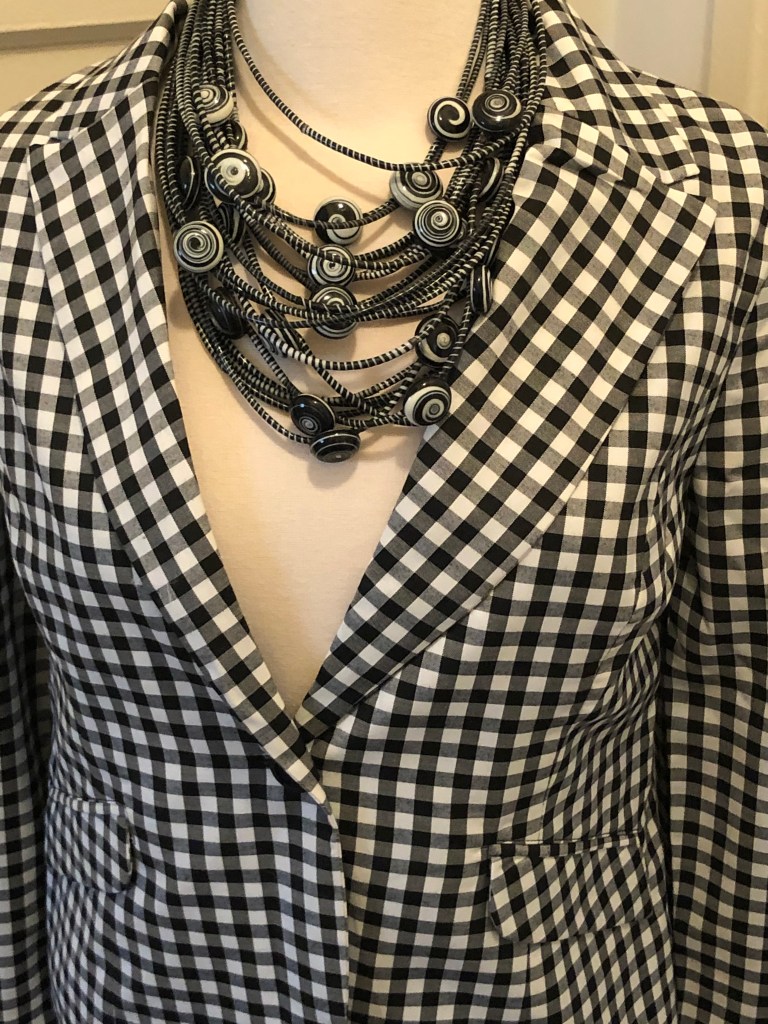
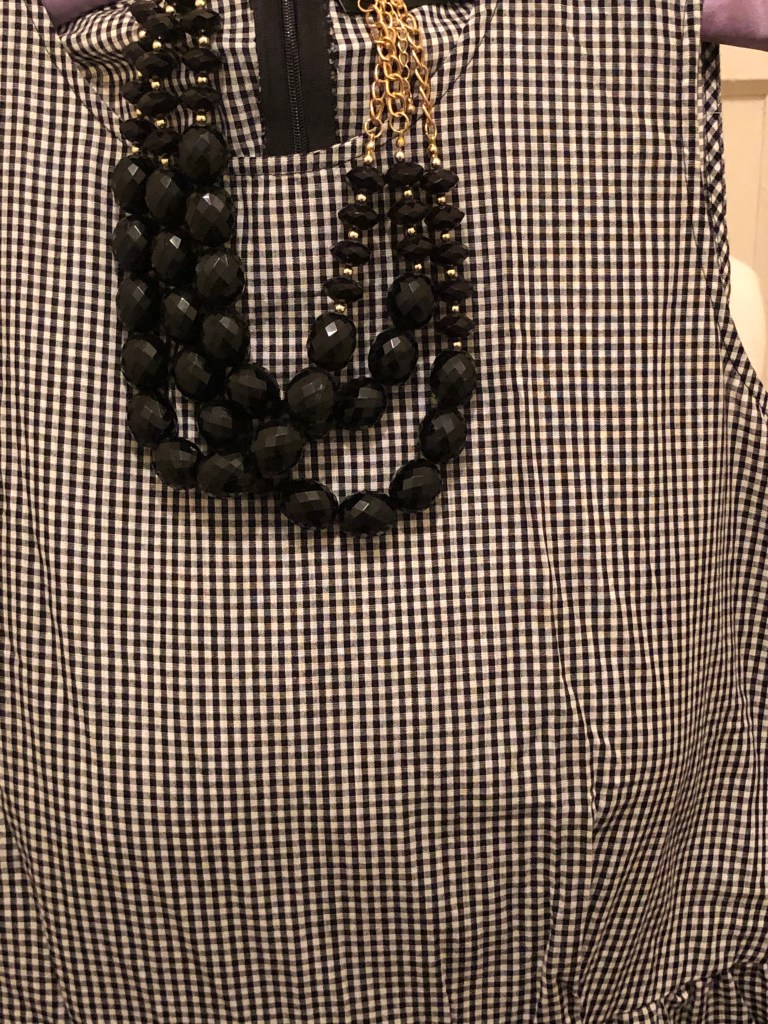
I’ve always loved gingham and buy it whenever I can to brighten up my look. I’m so obsessed with it my younger brother swears every time I give him a new shirt, it’s gingham.
Throughout my research about the textile I discovered seven very interesting facts about it:
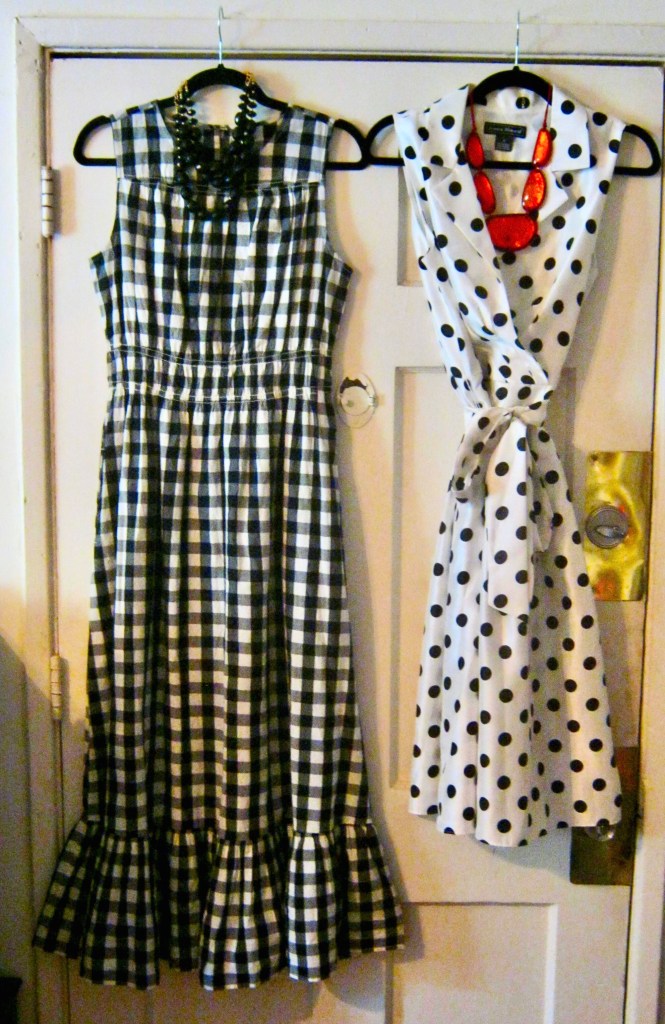


Despite it’s pleasing appearance gingham isn’t easy to wear and has its own rules:
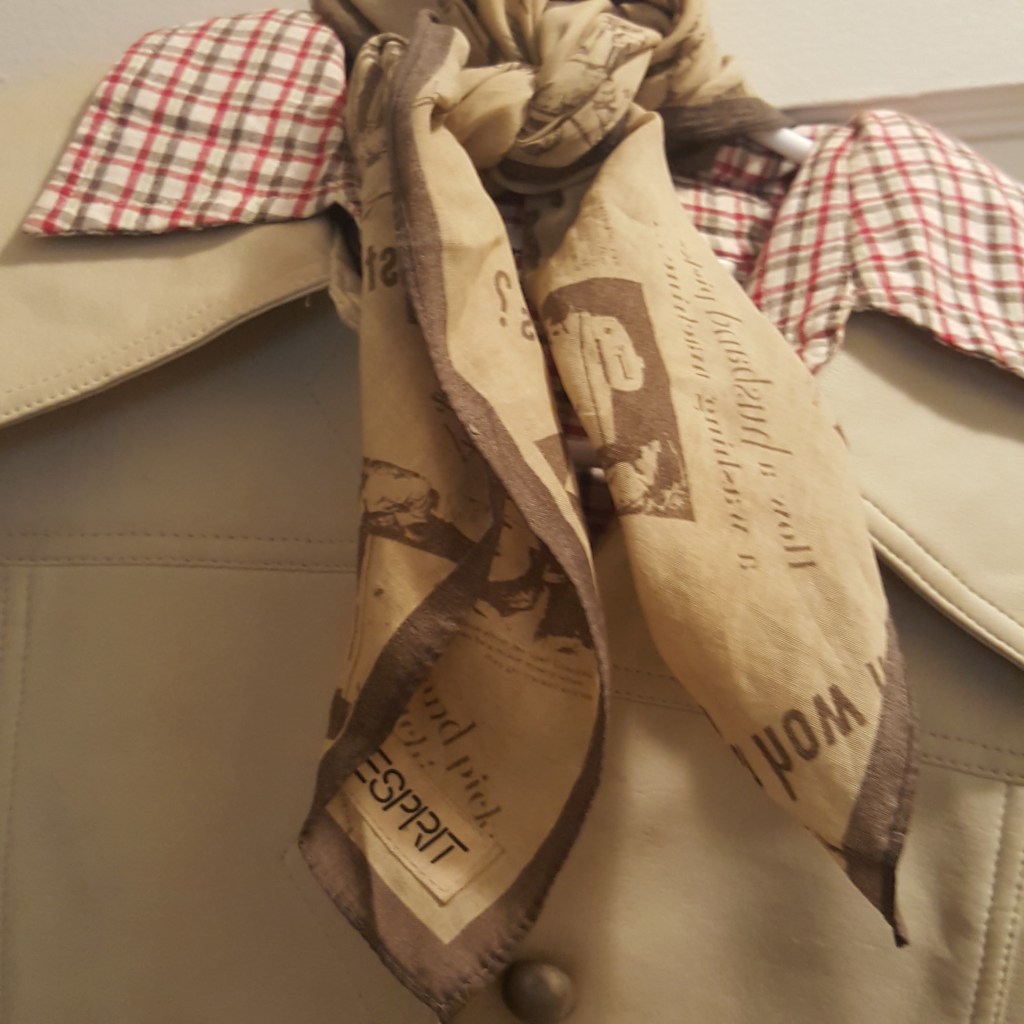
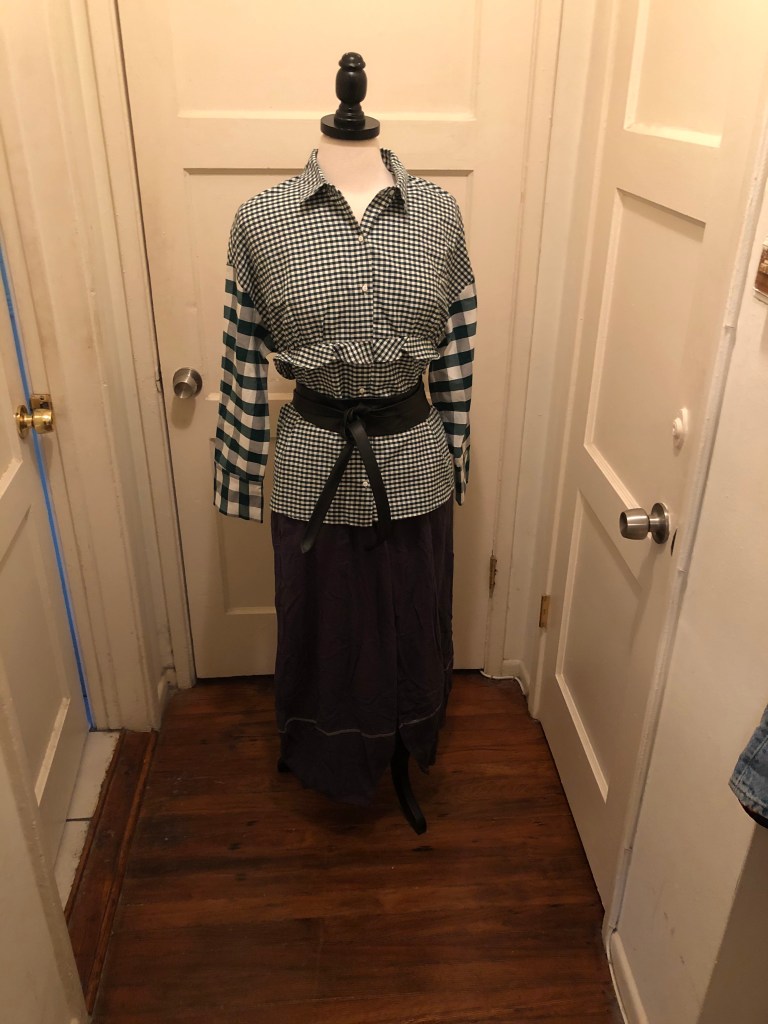




Blue and white striped Ralph Lauren shirt and red bead necklace
Now that I’m embarking on my third week back to school/work at my day job as a Special Education Instructional Assistant for LAUSD I’m more prepared to incorporate my current influences into my daily wardrobe. Over the summer I happily immersed myself in a more “put together” era, through Debbie Sessions’ historical 1950s style guides via http://www.vintagedancer.com and the book, The Gown by Jo Ellison, I’m reading for the Fashion Book Lovers Group I’m in, on http://www.goodreads.com. Despite this reality hit, and the hectic initial schedule of the fall semester beckoned, forcing me to contemplate how to wear something comfortable, sturdy, attractive and individualistic.

Skinny Jeans
If I looked at the unofficial dress code for the part of the city I work in, I’d have skinny, pre-distressed jeans, leggings, tight slogan tees, pajama bottoms, short shorts and furry slides to choose from. If I incorporated my new ’50s inspirations, however, with the trends I saw in Vogue, Harper’s Bazaar, Elle and the new magazine Fudge I’d just bought at Kinokuniya Books, I could definitely sidestep these overdone trends and come up with something more unique and personalized.
Freudian Book Page Party Decorations
Learning Can Be Fun: Monday Week 1
With that in mind, I combined the old with the new and started my Monday with a brown and white swirl print jacket from Goodwill Thrift Store over a red plaid shirt from Ross and a pair of Mossimo jeans from Target. To give it that ’50s edge I accessorized the outfit with a yellow and brown retro print scarf tied as a doo rag around my hair, a strand of pearls and a pair of black cat-eye shades.
FIDM Tote Bag
Settling In: Monday Week 2
Contrasting the form-fitting elan of last Monday’s ensemble, my mood became increasingly relaxed as I entered the second week, and I chose to embrace the structured jacket + flowy pant look of the fifties, by coordinating a navy-blue blazer with a white button-down men’s shirt and orange and white polka-dotted tie-front pants from Kohl’s. Accented with a skinny navy-blue polka-dotted scarf, from Fallas I also introduced a touch of Prada into the mix.



 Every Day Fashion: Style for the Mainstream